
Schools & Culture
How to Design a School Culture That Values Movement Every Day
6 min read
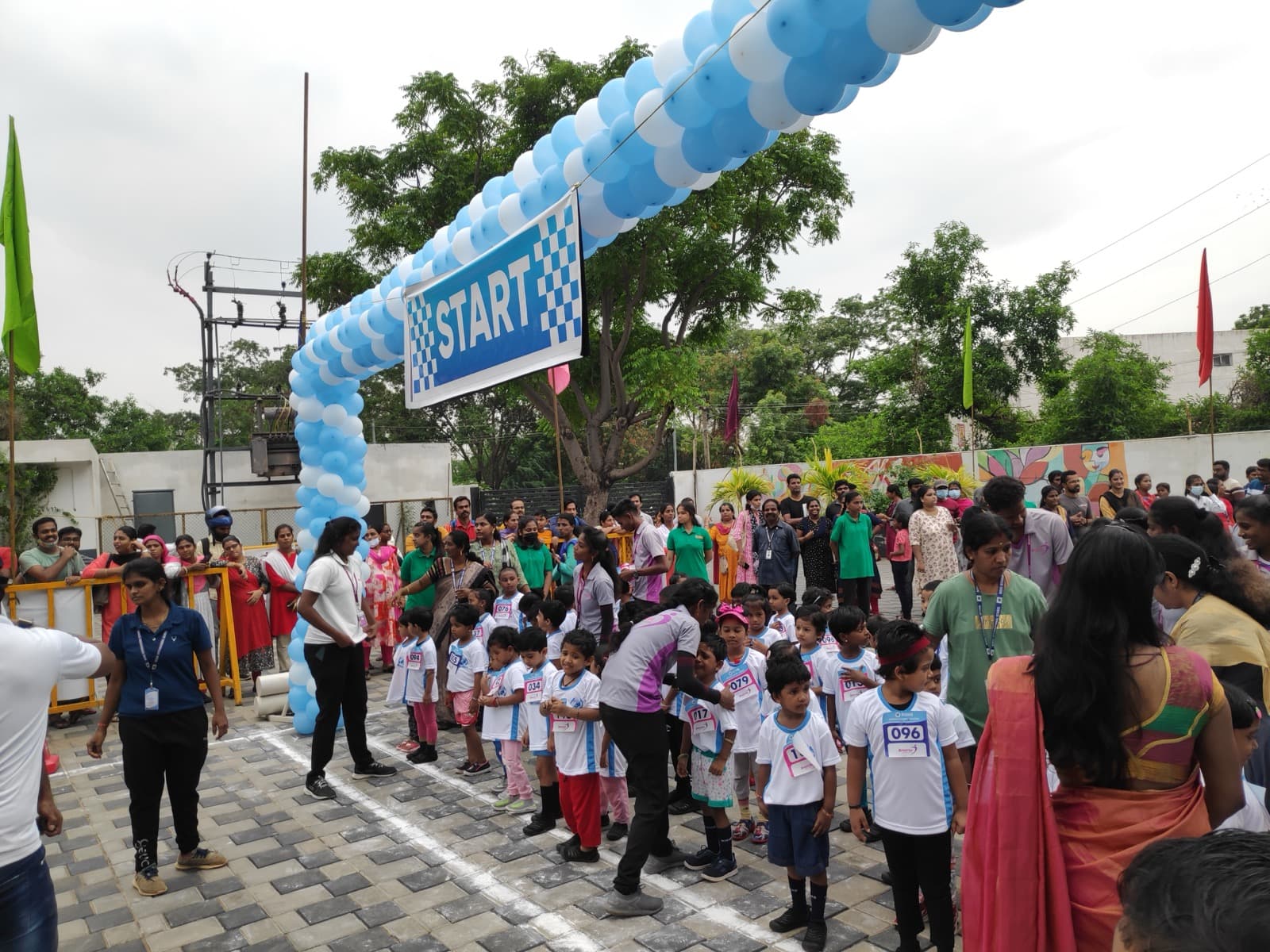
For too long, many schools have treated movement as a break from learning rather than a condition that helps learning happen. Yet research increasingly shows that physical activity is associated with improved academic performance, stronger cognitive functioning, and better classroom readiness, while added activity time does not appear to harm academic outcomes (Rasberry et al., 2011; Singh et al., 2012). That insight should change how schools think about culture. A school culture that values movement every day is not simply a school that hosts an annual sports day or offers a few extracurricular teams. It is a school that recognises movement as part of child development, part of student well-being, and part of educational excellence. This matters because schools shape habits at scale. WHO states that children and adolescents aged 5 to 17 should accumulate at least 60 minutes of moderate- to vigorous-intensity physical activity daily, and it explicitly includes play, games, sport, transport, recreation, and physical education within that total (World Health Organization, 2011). Since children spend a significant share of their waking hours in school settings, schools are one of the most important environments for turning that recommendation into a daily reality.
What a movement-rich school culture looks like
A culture that values movement every day is built through systems, routines, and visible priorities. In practice, that means schools do at least five things consistently:
- They timetable structured physical education rather than leaving activity to informal gaps.
- They create opportunities for movement across the day, not only during one designated period.
- They protect play and recess as essential parts of child development.
- They ensure participation is inclusive and not limited to athletically advanced students.
- They treat movement as part of the school’s developmental mission, not as a side offering.
This whole-child view is strongly aligned with the broader literature on play. UNICEF describes play as an essential strategy for learning in early childhood, noting that through play children explore, discover, make sense of the world, and develop imagination, creativity, and social learning capacities (UNICEF, 2018). The American Academy of Pediatrics likewise argues that developmentally appropriate play supports social-emotional, cognitive, language, and self-regulation skills, and helps build executive function and safe, stable, nurturing relationships (Yogman et al., 2018). For schools, the implication is clear: movement-rich environments are not only about fitness metrics. They are about developing the full architecture of learning, including attention, emotional regulation, cooperation, confidence, and self-management.
Why play and structured PE both matter
A strong school culture values both free play and structured physical education because they serve different but complementary purposes. Play creates space for exploration, imagination, joy, negotiation, and self-directed learning. UNICEF’s learning-through-play framework argues that play helps children connect knowledge to experience and supports motivation, engagement, and meaning-making in early learning contexts. A systematic review of in-school play opportunities found that more recess was associated with better behaviour and social-emotional outcomes, while not being detrimental to academic achievement (Burson & Castelli, 2022). At the same time, schools also need structured physical education. Structured PE develops movement competence progressively, introduces children to a range of sports and physical skills, and ensures that development is intentional rather than accidental. This is especially important because many children will not automatically acquire foundational movement skills without guided instruction. The most effective school cultures do not force a choice between play and structure. They combine the freedom of play with the discipline of curriculum.
The leadership challenge for schools
Designing a movement-first school culture is fundamentally a leadership decision. When school leaders treat physical education as peripheral, the rest of the institution tends to do the same. When they treat it as essential to child development, it becomes embedded in scheduling, staffing, assessment, communication, and school identity. That leadership shift matters because movement is easy to support rhetorically and equally easy to neglect operationally. Schools may say they value holistic development, but students quickly learn what is truly prioritised by what receives time, expertise, infrastructure, and visibility. A movement-rich culture therefore needs more than enthusiasm - it needs implementation capacity. It needs trained educators, age-appropriate planning, progression across grade levels, consistent monitoring, and a delivery model that works even when time, space, or internal sports expertise are limited. Those are precisely the barriers that keep many schools from moving from intention to execution.
Where Sportsa creates institutional value
This is where Sportsa’s value proposition becomes especially relevant for schools that want to move beyond occasional sports activity and build a genuine daily culture of movement. Sportsa offers an integrated, inclusive, age-appropriate sports and physical education model, with full-time certified and trained teachers, a structured and researched curriculum, structured lesson plans, age-appropriate games, technology-driven assessment and monitoring, equipment support, and programs that can operate even in limited spaces. The program is designed for children from kindergarten to Grade 12 and includes talent identification, school team development, tournament exposure, yoga, self-defence, athletics, and after-school coaching. That is a significant value proposition for school decision-makers because it shifts sports from being an operational burden to a managed institutional capability. Instead of expecting schools to assemble fragmented pieces on their own, Sportsa provides a more complete system: curriculum, people, equipment, delivery, and monitoring. For schools trying to strengthen student development while also differentiating their brand in a competitive market, that integration matters. The Sportsa booklet also frames its offering in terms of benefits that extend beyond physical fitness, including confidence, self-esteem, memory, focus, teamwork, resilience, social interaction, academic performance, and school brand visibility. The model can support school enrolment, retention, student achievement in sports, and improved use of sports infrastructure. Sportsa’s premium promise is that it helps schools institutionalise movement in a structured, scalable, and educationally aligned way.
From activity to identity
The schools that will stand out in the coming years are unlikely to be those that speak only about marks and examinations. They will be the schools that can demonstrate a richer developmental philosophy and a stronger lived student experience. Parents are increasingly drawn to schools that recognise the whole child. In that context, a visible culture of movement must become part of the school’s identity. It signals that the school values health, confidence, discipline, teamwork, emotional resilience, and long-term well-being alongside academic growth. This aligns closely with Sportsa’s stated mission to make sports an integral part of education through a structured, age-appropriate curriculum and trained staff support. The deeper question, then, is no longer whether movement belongs in education. The question is whether schools are willing to design for it intentionally.
The real opportunity
Designing a school culture that values movement every day is not about adding more noise to the calendar. It is about rethinking what excellent education looks like. It means moving from isolated events to daily habits. From unstructured goodwill to planned delivery. From seeing sport as extracurricular to recognising movement as educational infrastructure. Schools that make this shift are likely to create healthier students, stronger learners, and a more compelling institutional identity. Sportsa is well positioned to help schools make that shift because its integrated program is built around a clear operational promise: make movement consistent, developmentally appropriate, measurable, and central to the life of the school. In that sense, the most progressive schools will not be the ones that merely say they care about holistic development. They will be the ones that build it into the timetable, the campus culture, and the student experience every single day.
Designing a school culture that values movement every day is a strategic decision with measurable educational and wellbeing payoffs; it requires leadership, consistent systems, and a delivery model that turns good intentions into daily practice. Schools that embed movement into their identity create healthier, more resilient, and higher-performing learners — and they gain a clear institutional advantage in a competitive education market. Sportsa partners with schools to make that transformation practical, measurable, and scalable through a structured, age-appropriate, and inclusive integrated program.