
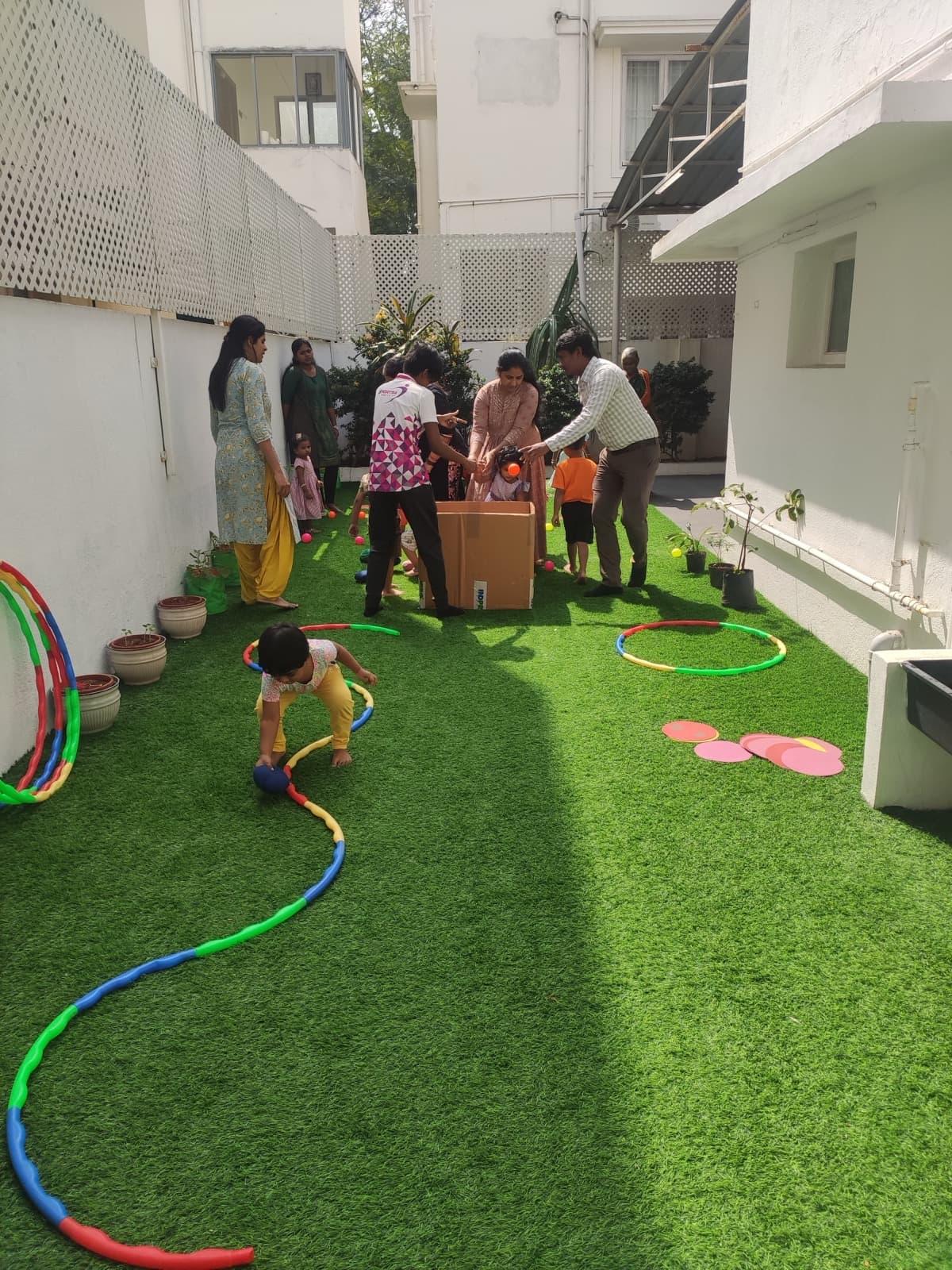
For too long, play has been seen as something separate from learning — a short break from the “real” work of school. But that view misses one of the most important truths in education: play is not outside learning, it is part of it. When children engage in play-based learning and structured sports education, they are not wasting time. They are building the physical, cognitive, emotional, and social foundations that support lifelong growth (American Psychological Association, n.d.; Neville et al., 2018). In today’s education landscape, schools are expected to do more than deliver academic results. They are expected to support holistic child development, build confidence, encourage discipline, and prepare children for life beyond the classroom. That is where play, physical education, and school sports programs become essential. At Sportsa, this belief is not just a philosophy - it is the foundation of the work being done every day through structured sports education and age-appropriate physical education programs. Sportsa extends this philosophy into early childhood through Sportsa KLAP — Kids Learn At Play, a program designed specifically for kindergarten children. Sportsa KLAP focuses on early sports participation through engaging, age-appropriate sports education, training, and comprehensive sports management. By introducing movement, play, and guided sports experiences at the foundational stage of learning, Sportsa KLAP helps children build confidence, coordination, teamwork, and a positive relationship with physical activity from the very beginning. When children are given access to meaningful play and guided movement experiences, they begin to learn in ways that are natural, active, and lasting. They develop better focus, stronger communication skills, improved resilience, and a greater sense of belonging. Play-based learning is not simply about fun. It is about helping children grow into capable, confident, and well-rounded individuals (Berk, 2018; NAEYC, 2022; IES, 2022; LEGO Foundation, 2021).
Play as a Powerful Form of Learning
Play is one of the earliest and most effective ways children learn about the world. Long before they can write essays or solve equations, children are learning through movement, exploration, imagination, and interaction. They test ideas, notice patterns, understand rules, and build relationships through play. These experiences form the basis of child development and prepare children for more complex academic and life skills later on (American Psychological Association, n.d.; IES, 2022). When a child builds with blocks, participates in a team game, or creates a story with friends, they are using memory, reasoning, language, and coordination. These are not separate from education; they are education in action. This is why play-based learning is such an important part of early childhood education and school sports programs. It allows children to become active participants in learning rather than passive listeners (Berk, 2018; NAEYC, 2022; LEGO Foundation, 2021). At Sportsa, this understanding shapes the design of every structured sports education program. The goal is not just to keep children physically active. The goal is to create meaningful learning experiences through sports, movement, and guided play that support the whole child. This is especially important in the early years, when children learn most naturally through movement and play. Sportsa KLAP reflects this principle by offering kindergarten-focused sports experiences that are tailored to developmental needs. Rather than treating physical activity as separate from learning, KLAP uses structured, playful engagement to help young children develop gross motor skills, coordination, and early social habits in a way that feels enjoyable and meaningful.
Creativity, Curiosity, and Confidence
One of the greatest strengths of play-based learning is its ability to develop creativity. In an academic environment that often rewards only the right answer, play gives children space to imagine, experiment, and express themselves. A stick becomes a bat, a game becomes a story, and a simple activity turns into an opportunity to think in new ways (NAEYC, 2022; LEGO Foundation, 2021). This creative freedom matters because creativity is closely linked to problem-solving, flexibility, and confidence. Children who are encouraged to explore through play often become more adaptable and more open to learning. They are less afraid to make mistakes because they understand that experimentation is part of growth (Berk, 2018; IES, 2022; LEGO Foundation, 2021). Structured sports education supports this development by giving children a variety of movement experiences, team activities, native games, and age-appropriate physical education opportunities. Sportsa’s programs are designed to encourage curiosity and engagement, helping children discover what they are capable of while building the confidence to try new things. Sportsa KLAP is designed to make these early experiences fun, engaging, and accessible. Its sessions include age-appropriate sports and activities filled with games, challenges, and exercises that keep children active while encouraging curiosity and participation. This kind of early exposure helps children build self-esteem and a sense of comfort with movement, both of which are essential to long-term confidence and learning readiness.
Problem-Solving and Decision-Making Skills
Play is also a powerful way to develop problem-solving and decision-making skills. Every game contains choices, challenges, and outcomes. Children must decide how to move, when to act, how to respond, and how to adjust when things do not go as planned. These moments build critical thinking in a way that feels natural and memorable (IES, 2022; NAEYC, 2022; LEGO Foundation, 2021). In school sports programs, children learn to make decisions under pressure, observe patterns, and adapt their responses. They learn that mistakes are not failures but part of the learning process. This mindset is incredibly valuable in both academics and life (IES, 2022). At Sportsa, structured sports education is designed to support this kind of growth. Through carefully planned lesson progression, children move from simple movement activities to more organized games and sports, where they must think, react, and collaborate. Every child engaged in the Sportsa curriculum gains access to team sports where they learn to work as a team while also perfecting their skills in specific roles and positions. This approach helps strengthen decision-making while keeping children engaged, active, and motivated.
Communication, Teamwork, and Social Development
One of the clearest benefits of play-based learning and structured sports education is the way they build communication and teamwork. In group games, children learn how to listen, speak, negotiate, cooperate, and sometimes disagree respectfully. These are essential social skills that support healthy relationships in school, at home, and in the future workplace (NAEYC, 2022; sportanddev, 2023). A child who plays with others learns how to take turns, follow rules, share space, and work toward a common goal. They also learn how to handle success and disappointment, how to support teammates, and how to resolve conflict in healthy ways. These are all important parts of child development that cannot be fully taught through textbooks alone (Berk, 2018; LEGO Foundation, 2021). Sportsa’s physical education programs place strong emphasis on team-based learning, school sports participation, and collaborative activities that help children build social confidence. By creating opportunities for structured play, Sportsa helps students develop empathy, leadership, respect, and cooperation — all of which are essential for holistic development. Early sports participation also plays a valuable role in helping young children interact with peers, follow simple group instructions, and begin learning teamwork. Sportsa KLAP emphasizes social interaction and positive participation at the kindergarten level, helping children feel supported, included, and encouraged as they learn alongside others. These early shared experiences can shape how children relate to group settings for years to come.
Emotional Regulation and Resilience
Children often reveal their emotions most clearly through play. They get excited, frustrated, proud, disappointed, and determined. Over time, these repeated experiences help them learn how to manage their emotions and regulate their responses. A child who loses a game and tries again is building resilience. A child who waits for a turn is learning patience. A child who works with others to reach a shared goal is learning self-control and trust (Neville et al., 2018; LEGO Foundation, 2021). This emotional development is one of the strongest reasons why play should be taken seriously in education. Children who participate regularly in physical education and school sports often develop stronger self-esteem and greater emotional balance. They begin to understand that success is not only about being perfect; it is about persistence, effort, and improvement (American Psychological Association, n.d.). Sportsa’s approach includes social-emotional learning, structured coaching, and opportunities such as self-defence for girls, all of which help children develop inner strength and confidence. Through sports, children learn how to face setbacks, manage pressure, and grow from experience. These are not just athletic skills — they are life skills.
Why Schools Should Invest in Play-Based Learning
If schools want to prepare children for the future, they must treat play as a serious part of education. That does not mean replacing academics. It means recognizing that children learn best when intellectual, physical, emotional, and social development work together (NAEYC, 2022; American Psychological Association, n.d.; LEGO Foundation, 2021). A school that values play-based learning understands that children need movement, imagination, interaction, and joy in order to thrive. It also understands that the qualities developed through sports education — discipline, communication, creativity, resilience, and leadership — will remain valuable long after school ends. (sportanddev, 2023). This is especially important in modern education, where children are often under pressure to perform academically while still needing healthy outlets for growth and self-expression. Play offers balance. It creates a more complete learning experience and supports better student wellbeing (IES, 2022). Sportsa helps schools bring this philosophy to life by offering integrated sports and physical education programs that are structured, inclusive, and developmentally appropriate. With trained teachers, customized curricula, lesson plans from KG to Grade 12, sports equipment, props, and school-based coaching, Sportsa helps make play a meaningful part of education.
Why Early Sports Participation Matters
If play is essential to education, then early sports participation is one of the most practical ways to bring that belief to life. The kindergarten years are a critical stage for physical, emotional, and social development. During this period, children are building basic movement patterns, learning how to interact in groups, developing self-confidence, and forming habits that can influence their relationship with physical activity for years to come. Sportsa KLAP addresses this stage with a model that is both playful and purposeful. By combining professional coaching, age-appropriate activities, and a positive environment, the program helps schools create stronger early childhood experiences through sports. It shows how structured physical education can begin in simple, joyful ways while still contributing meaningfully to holistic child development.
A Better View of Childhood
At its core, play respects the nature of childhood. Children are not miniature adults. They are developing human beings who learn through experience, repetition, interaction, and curiosity. When adults make room for play, they allow children to develop at the pace and in the manner that best supports their growth (American Psychological Association, n.d.; Berk, 2018). Treating play as serious does not mean making it rigid. It means understanding its purpose. It means recognizing the value of movement, laughter, imagination, and collaboration. It means acknowledging that some of the most important lessons in life begin on the playground, on the field, and in the moments children create for themselves (NAEYC, 2022; LEGO Foundation, 2021). For Sportsa, this belief shapes everything from curriculum design to school partnerships. The goal is not only to build active children, but to help shape confident learners, thoughtful teammates, and capable young people who are ready for the future. If education is meant to prepare children for life, then play-based learning and structured sports education must be seen not as optional, but essential.
What Sportsa Offers
Sportsa is committed to making structured sports education accessible, practical, and impactful. Its offerings include integrated sports and physical education programs, full-time trained teachers and coaches, customized lesson plans, after-school coaching, training camps, tournament exposure, talent identification, and school team development. We provide sports equipment, assessment tools, yoga, athletics, self-defence, and native games that support a wide range of child development outcomes. Each program is designed to be age-appropriate, inclusive, and purposeful. An important part of Sportsa’s offerings is Sportsa KLAP (Kids Learn At Play), which brings structured sports education into the kindergarten years. The program is built around the understanding that early sports participation matters because it helps develop gross motor skills and coordination, promotes social interaction and teamwork, builds confidence and self-esteem, encourages a healthy and active lifestyle, and fosters a love for sports and physical activity from a young age. Sportsa KLAP is led by experienced and certified coaches who specialize in early childhood sports education. The program emphasizes age-appropriate activities, fun and engaging sessions, a positive and inclusive environment, and holistic development through sports. In this way, Sportsa KLAP strengthens Sportsa’s broader philosophy by ensuring that structured physical education begins not later in childhood, but right at the start of a child’s educational journey. What makes Sportsa’s philosophy unique is that play is not treated as an extra activity. It is treated as an essential part of holistic education, school culture, and long-term student growth. Read more to discover how Sportsa - through programs like Sportsa KLAP - helps schools create meaningful sports experiences that support holistic child development from the earliest years onward.
References
American Psychological Association. (n.d.). Why we learn best through play, with Kathy Hirsh-Pasek, PhD. https://www.apa.org/news/podcasts/speaking-of-psychology/play Berk, L. E. (2018). Development through the lifespan (7th ed.). Pearson. Institute of Education Sciences. (2022, July 5). The importance of play-based learning in early education. https://ies.ed.gov/learn/blog/prioritizing-play-importance-play-based-learning-early-education LEGO Foundation. (2021, November 25). The scientific case for learning through play. https://learningthroughplay.com/explore-the-research/the-scientific-case-for-learning-through-play National Association for the Education of Young Children. (2022). The power of playful learning in the early childhood setting. https://www.naeyc.org/resources/pubs/yc/summer2022/power-playful-learning Neville, R. D., & colleagues. (2018). Healthy play, better coping: The importance of play for the development of children in health and disease. Neuroscience & Biobehavioral Reviews, 95, 421–429. https://doi.org/10.1016/j.neubiorev.2018.09.024 sportanddev. (2023, January 16). Healthy development of children and young people through sport. https://www.sportanddev.org/thematic-areas/youth-development/healthy-development-children-and-young-people-through-sport