Impact & Outcomes
What Happens When a Child Gets Access to Structured Sports Education?
6 min read
In today's fast-paced world, where academic pressure often overshadows physical activity, structured sports education emerges as a game-changer for child development. Imagine a child in a government school in Tamil Nadu, previously limited to unstructured playtime, suddenly gaining access to trained coaches, age-appropriate equipment, and a progressive curriculum. What unfolds is a holistic transformation - physical, mental, emotional, social, and long-term - that reshapes their trajectory. At Sportsa India Organization, we've witnessed this firsthand across 100+ schools and 52,000 students. This article explores the profound impacts of structured sports education on child development, backed by real-world examples and research insights. Structured sports education refers to organized programs integrating physical education (PE) into school routines with certified trainers, customized lesson plans, specialized tools and skill progression from KG to Grade 12.
Physical Transformation: Building Strong Foundations
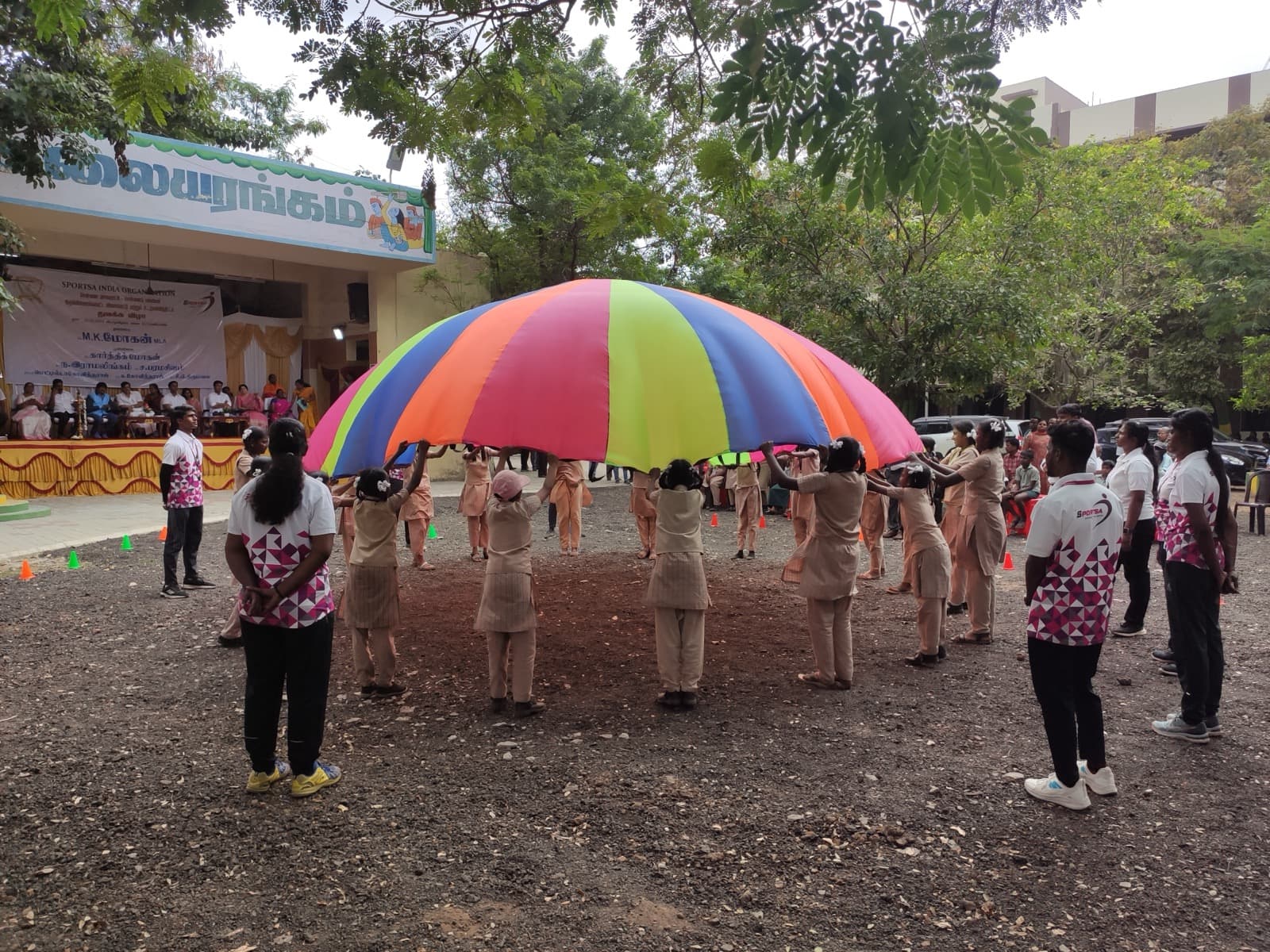
The most immediate change occurs in a child's body. Regular structured sessions—40-minute classes with warm-ups, skill drills, games, and cool-downs—enhance motor skills, strength, coordination, and endurance. For kindergarteners, activities like parachute games and bean bag tosses develop fundamental movements. By primary levels, multi-sport exposure builds agility and balance; middle and secondary students advance to organized games like volleyball, athletics, or cricket. This leads to tangible health benefits: reduced obesity risk, improved cardiovascular fitness, better posture, and higher energy for academics. In resource-limited schools, Sportsa's programs adapt with space-efficient props (hula hoops, poly spots, mini nets), ensuring inclusivity. Children who once sat idle now sprint, jump, and throw with confidence, laying the groundwork for lifelong fitness habits.
Mental and Cognitive Boost: Sharper Minds Through Movement
Structured sports education isn't just about the body - it's a cognitive powerhouse. Physical activity triggers endorphin release, reducing stress and anxiety while boosting focus, memory, and problem-solving. Drills requiring quick decisions (e.g., passing in volleyball or strategizing in chess) sharpen executive functions, directly aiding math and language performance. Research consistently shows sports-involved kids exhibit better concentration and academic outcomes. A child practicing agility ladders learns pattern recognition; relay races teach sequencing. At Sportsa, technology-driven assessments via mobile apps track progress, fostering a growth mindset: effort yields results. Over time, this resilience helps children navigate exam stress and setbacks.
Emotional Growth and Resilience: From Fragile to Fearless
Emotional regulation blossoms on the field. Wins build self-esteem; losses teach perseverance. Structured programs instill discipline through routines - showing up daily, following coach instructions, and reflecting via peer checklists (e.g., "knees bent, arms extended" in volleyball). For girls, Sportsa's self-defence modules add empowerment, addressing safety concerns while promoting confidence. Emotional skills like managing frustration during a missed shot translate to classroom patience. Children learn to celebrate teammates' successes, curbing envy and building inner strength. The result? Resilient young minds ready for life's challenges.
Social Skills and Teamwork: Lifelong Connections
Sports fields are social laboratories. Team games demand communication, role-sharing, and empathy- passing the ball means trusting a peer. In diverse classrooms, structured PE bridges divides, fostering inclusivity and respect. Sportsa emphasizes native Tamil Nadu games and yoga, making it culturally resonant. Leadership emerges naturally: captains organize drills, mentors guide juniors. For underprivileged kids, this counters isolation, building networks that extend beyond school. Tournaments (inter-school, zone-level) expose them to healthy competition, teaching sportsmanship and collaboration—skills vital for future workplaces.
Discipline and Life Skills: Habits That Last
Coaches model punctuality, goal-setting, and accountability. A typical lesson plan allocates time precisely: 3-5 mins intro, 7-8 mins fitness, 12-15 mins skills, 5-7 mins game. Children internalize these, improving time management and responsibility. Children are introduced to ethical values like fairness, unity and humility through sport. Beyond sports, programs like drug awareness, first aid, and career guidance equip kids holistically. Talent identification feeds school teams and summer camps, sparking athletic dreams. These habits spill over: sports kids often excel in studies due to disciplined routines.
Career and Higher Education Opportunities Through Sports Quota
Beyond physical, emotional, and social development, structured sports education opens pathways to higher education and careers through sports quotas. In India, consistent participation and achievement in school-level sports can qualify students for reserved seats in colleges, universities, and professional courses—often 5-10% of seats across engineering, medicine, arts, and more. Sportsa's talent identification, tournaments, and coaching build the competitive record needed for these opportunities. For first-generation learners from government schools, this levels the playing field. A student excelling in volleyball or athletics gains not just skills but credentials for admissions otherwise inaccessible due to academic scores or financial barriers. Many state universities and IITs actively recruit via sports quotas, turning playground talent into engineering or medical seats. Structured programs also demystify sports careers: coaching, PE teaching, sports management, fitness training, physiotherapy, event organizing, and sports journalism become viable paths. Early exposure plants seeds—children see role models in trainers, understand certifications, and access guidance sessions. This expands horizons, making sports a bridge from underserved classrooms to empowered futures.
Combating Antisocial Behavior, Dropouts, and Substance Abuse
Structured sports education serves as a powerful safeguard against school dropouts, substance abuse, and broader antisocial behaviors. Sportsa's objectives explicitly target reducing dropout rates, boosting enrollment, and delivering awareness programs on drugs, self-defence, and social-emotional learning to curb juvenile issues. Regular PE creates routine, purpose, and belonging—key factors pulling children away from negative paths. Dropouts often stem from disengagement or lack of purpose. Sports counters this by making school exciting: students attend for team practices, tournaments, and peer camaraderie. Headmaster feedback notes improved discipline during assemblies, lunch, and dismissal, with children eagerly anticipating PET periods. This attachment reduces absenteeism and early exits. Antisocial behaviors—bullying, vandalism, gang involvement, truancy, aggression—thrive in idle time and weak supervision. Structured sports fills afternoons with supervised activity, channeling energy into drills and games. Coaches enforce rules, model respect, and mediate conflicts, teaching accountability. Self-defence for girls addresses harassment; team roles foster empathy over rivalry. Substance abuse finds less footing too. Awareness sessions educate on risks, while endorphin highs from play reduce vulnerability to escapism. Resilience from losses builds internal strength against peer pressure. Studies link sports participation to 20-30% lower delinquency rates, as disciplined routines replace risky hangouts. Together, these create protective ecosystems—keeping children safer, in school, and future-focused.
Long-Term Impact: From Playground to Potential
The ripple effects endure. Physically fitter children stay enrolled longer and pursue healthier lives. Sportsa aligns with Fit India and Khelo India, nurturing talent for national glory while fostering nation-builders. Headmaster testimonials praise enthusiastic trainers boosting physical and mental abilities, teamwork, and time management. Economically, it opens doors: scholarships, coaching careers, or sports industry roles. Mentally resilient grads become leaders - disciplined, collaborative, and adaptable. In Tamil Nadu's government schools, programs reach thousands, proving scalable change. Healthier bodies sharpen minds; structured habits forge resilient citizens. Future Outcomes:
- Reduced dropouts, crime, and health issues.
- Pathways to athletics, education, and careers.
- A nation-building generation through sports.
Why Structured Sports Education Matters Now
Access to structured sports education levels the playing field for underserved children, turning potential into performance. We are here to tackle the misconception that sports means elite athletics, when it should be essential education. At Sportsa India Organization, we're scaling this across Tamil Nadu, one school at a time. Ready to Get Involved? Partner with us and advocate for inclusive Physical Education in schools. Follow our journey on LinkedIn and visit www.sportsaindia.org to learn more. Keywords: structured sports education, child development through sports, physical education benefits, sports in schools Tamil Nadu, holistic child growth, youth sports impact, PE curriculum for kids.